On-site risk assessment
We look for visible defects such as cracks, included bark, decay indicators, and root plate movement, then evaluate what the tree can hit if something fails.
Serving San Antonio, Texas & surrounding areas
24/7 Emergency Response
Arborist Services · San Antonio, Texas
Get clear answers about tree risk, removals, and care from trained crews who work with safety systems, proper cuts, and jobsite cleanup that respects your property.
✓On-site risk assessment
✓Controlled rigging
✓Complete cleanup
Assessment Before Action
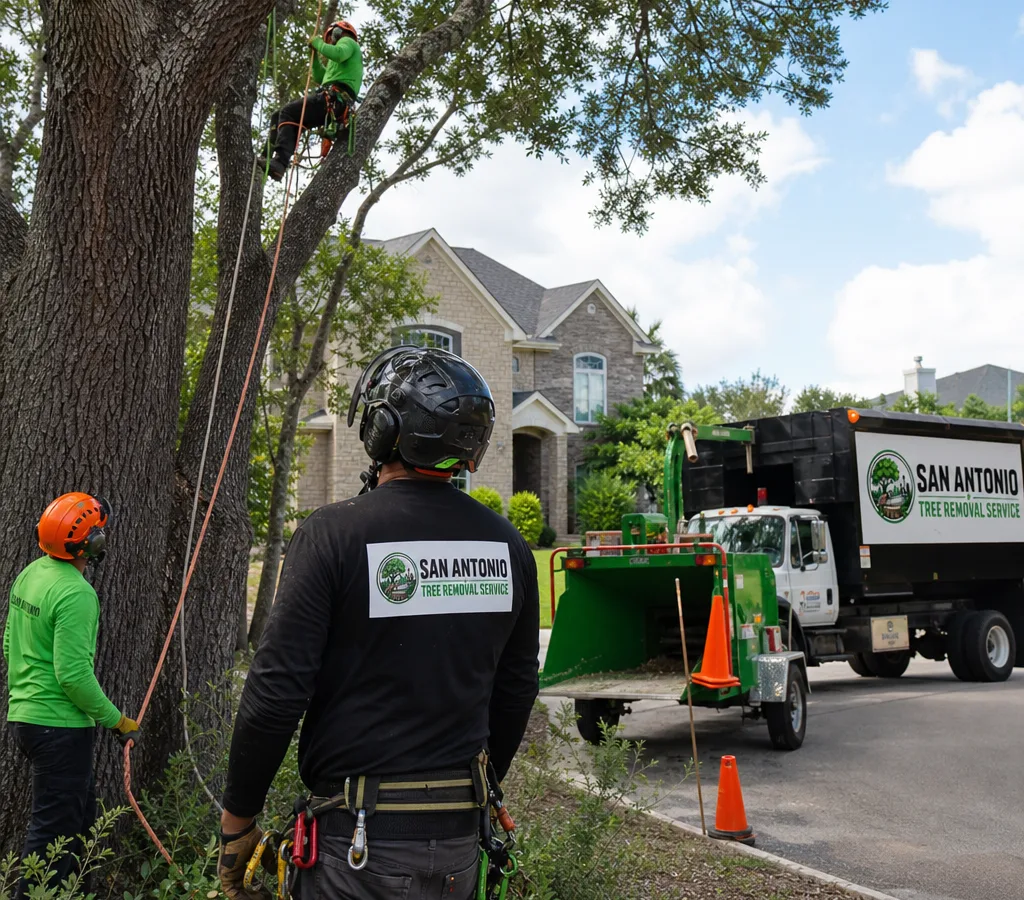
Searching for arborists in san antonio usually means you need more than a chain saw. A trained arborist looks at the whole situation: tree health, structural defects, targets such as rooflines, fences, and parked cars, access for equipment, and how the tree can be dismantled without uncontrolled drops.
Common reasons property owners bring in a san antonio arborist include:
San Antonio's hot summers and periodic storm events can expose weak unions and dead limbs fast. If a tree is close to a structure or power lines, the safest choice is almost always a planned, controlled job with rigging, drop zones, and a cleanup plan rather than an improvised cut.
Planned Tree Work
We look for visible defects such as cracks, included bark, decay indicators, and root plate movement, then evaluate what the tree can hit if something fails.
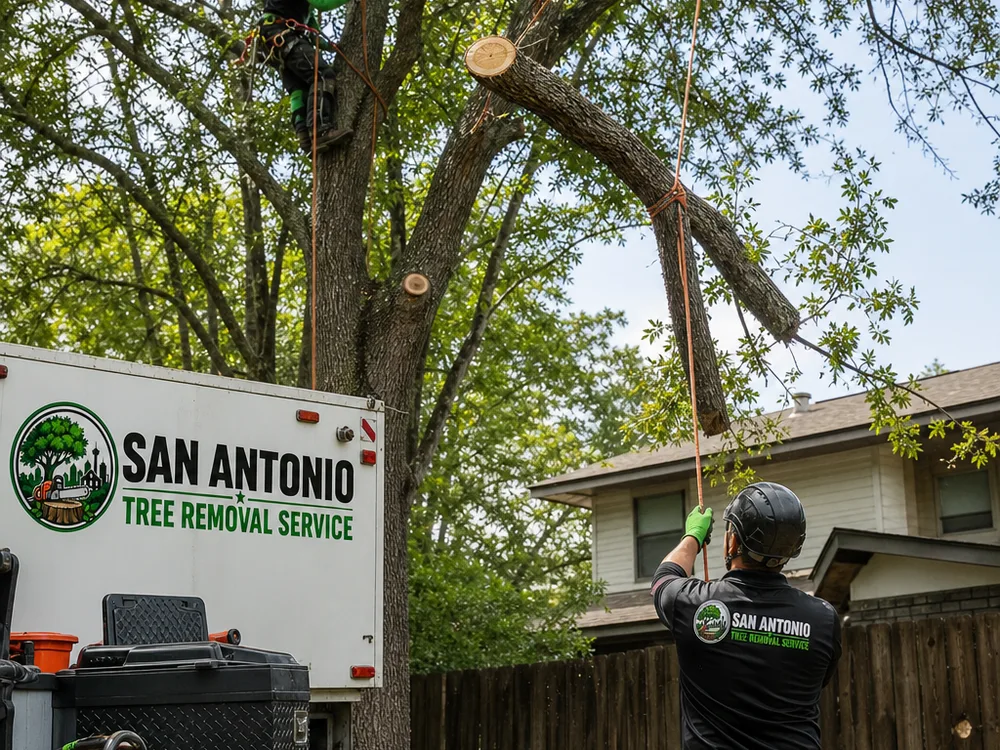
When there is no safe drop zone, we section the tree down in pieces using ropes, friction devices, and clear communication between climber and ground crew.
Proper pruning focuses on structure and clearance while avoiding topping and other practices that create weak regrowth and long-term risk.
Tight side yards, gates, and overhead obstacles change the method. A solid plan protects turf, irrigation lines, and hardscape.
Brush is chipped or hauled, wood is managed to your preference, and the work area is raked and blown so you are not left with a mess.
You get a clear description of what will be cut or removed, what gets hauled away, and what remains, including wood rounds, the stump, or mulch.
Technical Removals
Many removals in San Antonio are technical because trees often sit near property lines, patios, and driveways. When there is no safe open area to fell a tree in one piece, the job becomes a controlled dismantle.
A typical approach includes:
If a tree is entangled with service drops or near overhead distribution lines, the plan matters even more. In those cases, we focus on controlled piece work and clear boundaries for what the crew can safely touch, and we will recommend coordination steps when a utility needs to be involved.
If you are also comparing providers for broader work, start with San Antonio Tree Removal Service to see how our team approaches safety, access, and cleanup across common property types.
Assessment To Walkthrough
We walk the property, note tree condition and targets, and confirm access points for equipment and debris removal. If there are multiple trees, we help you prioritize the highest-risk items first.
You get a clear scope describing what is being pruned or removed, the approach such as climbing, rigging, or sectional dismantling, and what happens with brush and wood.
Before cutting starts, we establish the work zone, protect nearby surfaces as needed, stage rigging, and review hand signals and communication for the crew.
We use proper cutting technique, manage load on rigging, and keep pieces sized for safe handling. When appropriate, we reduce weight and leverage before larger sections are taken down.
Brush is chipped or hauled, the area is cleared, and we do a final walkthrough so you know exactly what was completed and what remains on site.
On-Site Pricing
Most arborist visits in San Antonio for pruning or small removals typically land around $250 to $1,200, while larger, higher-risk removals commonly range from $1,200 to $3,500+ depending on size and complexity. A straightforward small tree in an open yard costs far less than a large tree over a roof that must be rigged down in sections.
Final pricing changes with height and trunk diameter, condition such as dead or storm-damaged wood, proximity to structures, access for equipment, haul-off volume, and whether stump work is included. The exact cost is confirmed after an on-site inspection so the scope and safety plan match what is actually on your property.
Field Examples
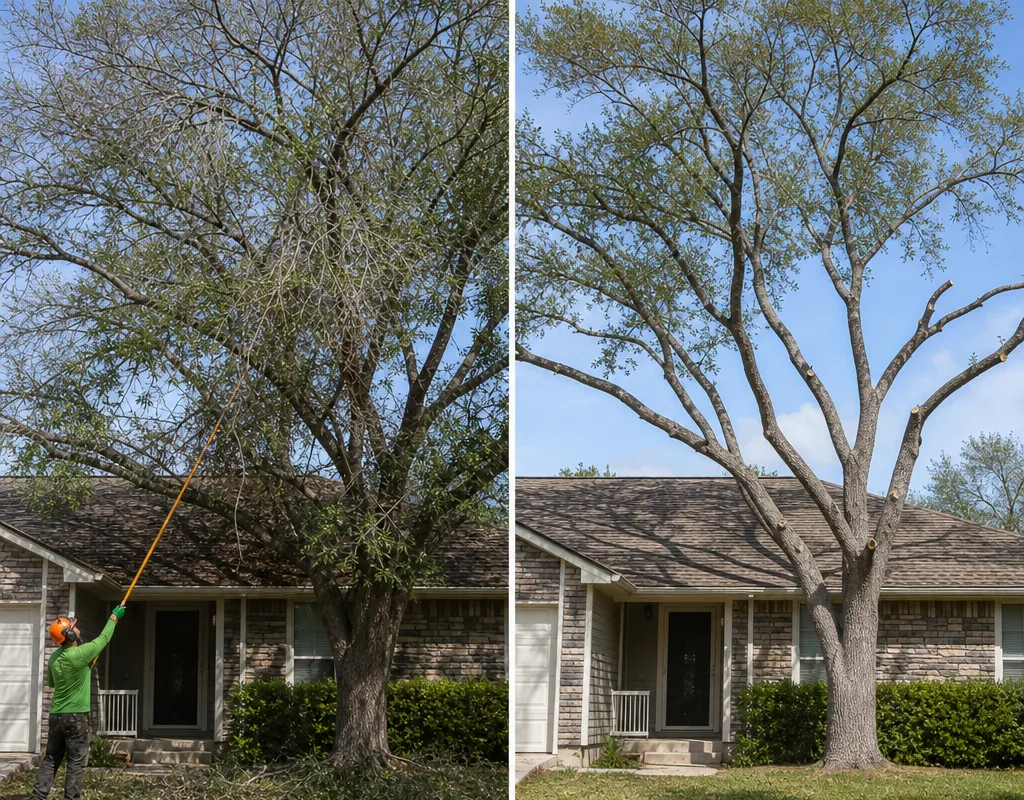
Local Job Planning
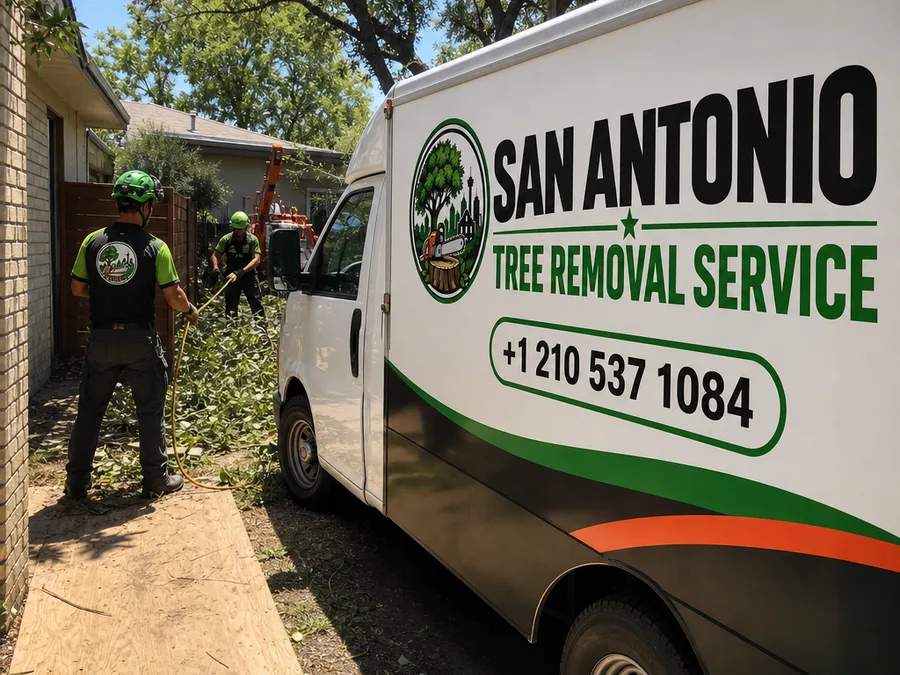
Arborist work is never one-size-fits-all in a city this spread out. What changes job planning in San Antonio is usually access and what the tree can hit.
Timing also matters. After major wind or storm events, demand spikes and truly hazardous trees need triage. If a tree is actively failing, leaning more, or dropping large limbs, do not wait for a convenient date. Get an arborist on site to assess the immediate risk and set a safe plan.
Helpful Answers
Choose an arborist who explains the rigging plan, identifies targets—what can be hit—and can describe how the tree will come down in sections when there is no safe drop zone. Ask what will be protected, how the work zone will be controlled, and what cleanup is included in the written scope.
Yes, a qualified arborist can usually remove a leaning tree by reducing weight and dismantling it in controlled sections with rigging rather than trying to fell it in one piece. The safest method depends on the lean direction, trunk condition, root stability, and whether there is any usable landing area.
Access and targets drive cost as much as size in San Antonio. A tree behind a fence, over a roof, near a driveway, or in a tight side yard often requires climbing, rigging, slower piece handling, and extra labor for debris movement, increasing time on site.
Haul-off is typically part of the scope, but it depends on what you want kept on site. Many customers have us remove brush and smaller wood while keeping larger rounds for firewood, so the written scope should state exactly what is hauled and what remains.
After storms, scheduling depends on severity and safety priority, but hazardous situations are usually assessed first. If a tree is hung up, cracked, or actively dropping limbs near a roofline or driveway, describe the immediate risk when you reach out so the visit can be prioritized appropriately.
Topping is generally avoided because it creates weak, fast regrowth and can increase future failure risk. A better approach is selective reduction and structural pruning that maintains a stable canopy while improving clearance and weight distribution, and an arborist can explain what is realistic for your specific tree.
Start With An On-Site Assessment
Tell us what you are seeing on the property and what the tree is near—roof, fence, driveway, or power lines. We will schedule an on-site assessment and provide a clear scope for safe pruning or removal in San Antonio.