Risk-first recommendations
We prioritize what affects safety: structural defects, decay indicators, and target exposure. You get a clear explanation of the risk drivers, not guesses.
Serving San Antonio, Texas & surrounding areas
24/7 Emergency Response
Certified Arborist · San Antonio, Texas
Get clear, defensible guidance on tree health, risk, and next steps. Our ISA-credentialed team inspects, explains options in plain language, and schedules quickly for homes and commercial properties across San Antonio.
✓ISA-credentialed team
✓On-site assessment
✓Clear recommendations
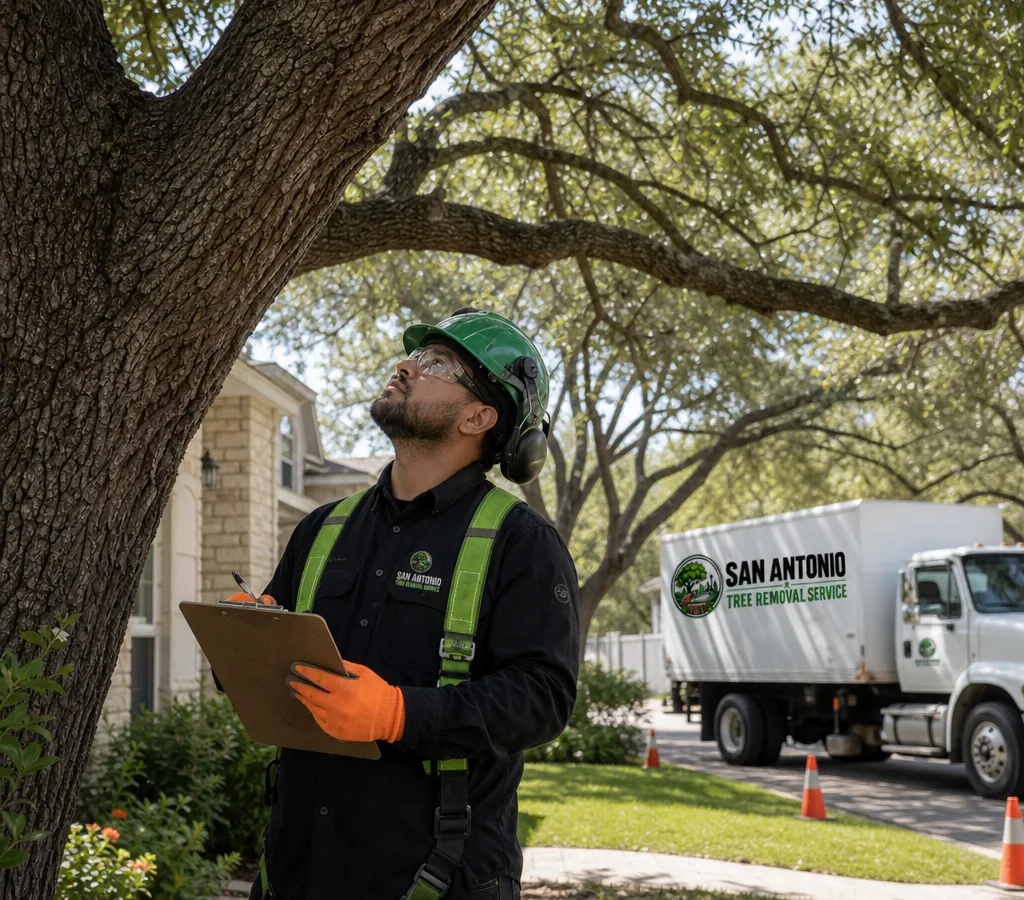
Informed Tree Decisions
If you are searching for a certified arborist San Antonio TX, you likely need an answer you can trust: Is this tree safe, is it declining, and what should happen next? A credentialed arborist evaluates the tree as a living structure, not just a work item. That means looking at the roots, trunk, scaffold limbs, canopy density, wounds, pest pressure, and what the tree is doing in its space.
In San Antonio, that evaluation matters because trees often live close to houses, fences, parking areas, and overhead lines. The right call might be pruning, cabling, or targeted removal, but it starts with an on-site inspection and a clear explanation of risk. Our team at San Antonio Tree Removal Service provides certified arborist consultations that help you make the right decision, document it, and schedule the work safely.
If your situation is urgent, an arborist visit can also help you prioritize: what needs immediate attention, what can wait, and what is likely to fail in the next wind or storm.
Whole-Tree Evaluation
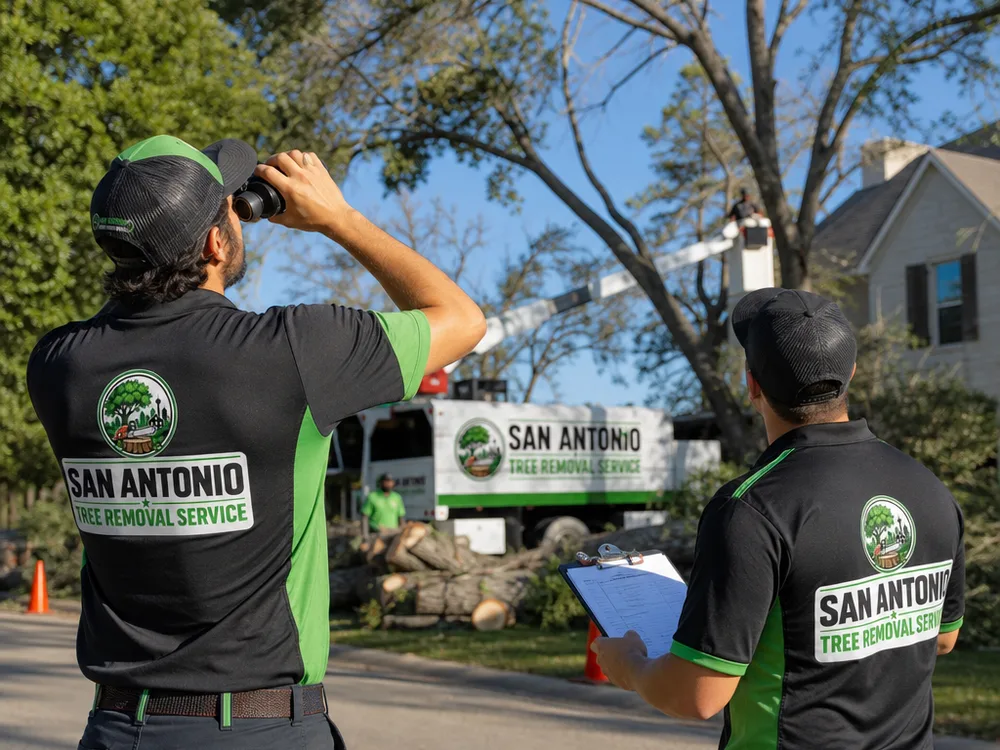
A thorough arborist assessment is more than a quick look at the canopy. We walk the site, then inspect the tree from the ground and, when needed, closer up to confirm structure and defects.
Typical items we evaluate:
You will get straightforward recommendations. When removal is the safest option, we explain why and outline how the removal would be staged and protected. If the tree can be retained, we focus on practical actions like pruning cuts to reduce end weight, clearance for roofs and service drops, and follow-up timing.
For a broader look at who we are and how we handle safety on jobs of all sizes, you can review our San Antonio tree service approach and scheduling standards.
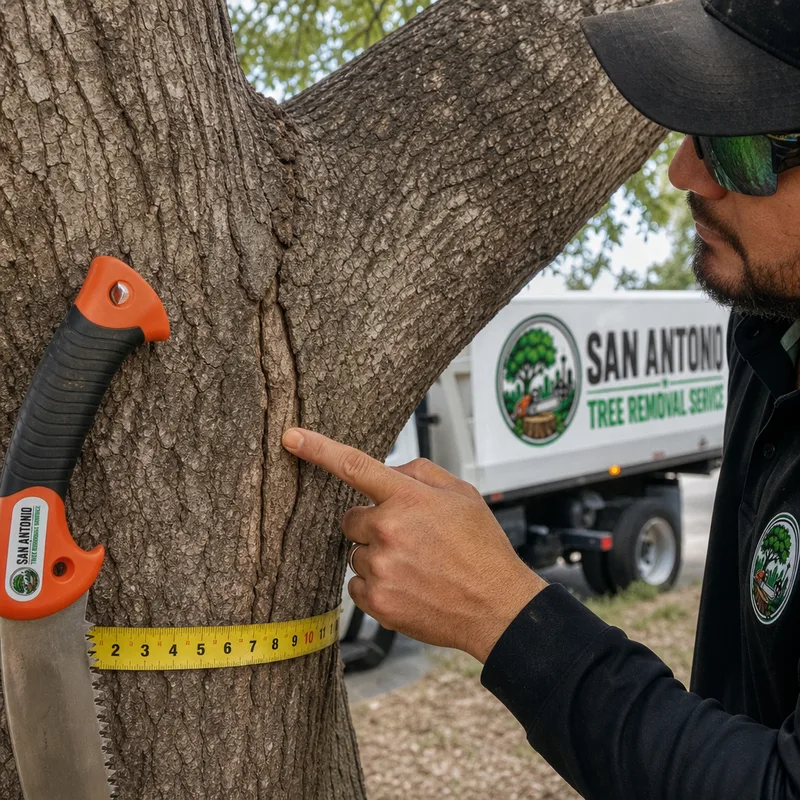
Credentialed Guidance
We prioritize what affects safety: structural defects, decay indicators, and target exposure. You get a clear explanation of the risk drivers, not guesses.
Correct pruning cuts protect the branch collar and reduce future decay. We focus on sound structure and clearance, not topping or random limb removal.
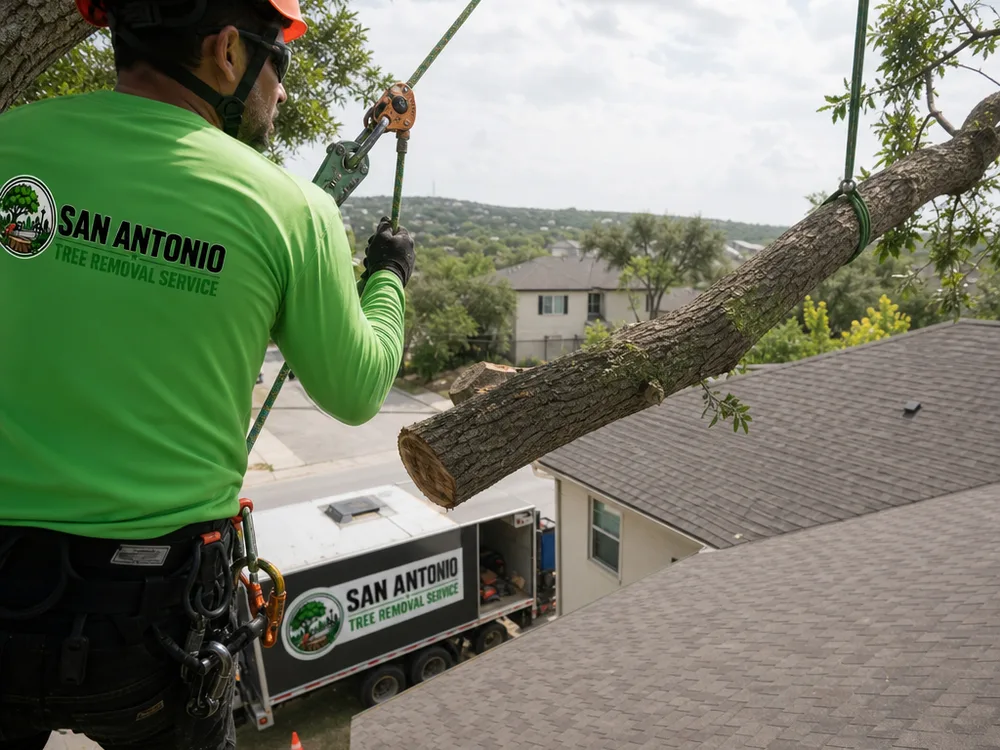
San Antonio properties often have tight side yards, patios, and overhead service drops. We plan rigging, drop zones, and protection before cutting begins.
When a tree is disputed or you need a clear rationale for action, a certified arborist evaluation provides a defensible basis for pruning or removal decisions.
If a tree can be kept, we may recommend selective thinning, deadwood removal, structural pruning, or support systems like cabling and bracing when appropriate.
On-Site Pricing
A certified arborist visit in San Antonio typically runs about $150 to $400 for a standard on-site assessment, while more complex situations—multiple trees, higher-risk targets, or written documentation needs—often fall around $400 to $900+. Final pricing depends on the number of trees, site access, the time required to inspect, and whether you need a written report.
The exact cost is confirmed after we understand the scope and what you need from the visit, based on the on-site inspection.
Concern To Clear Scope
Tell us what you are seeing—leaning, cracking sounds, dead limbs, roof contact, or storm damage. Photos help us prepare for the inspection, but we do not diagnose remotely.
We evaluate the tree or trees, nearby targets, and access. You will hear what matters most: the defect, the likelihood of failure, and the consequence if it fails.
We outline practical next steps: pruning scope, monitoring intervals, or removal. If removal is recommended, we explain the work plan, safety controls, and what happens to debris.
When a project needs coordination with utilities or any local requirements, we help you plan timing and the right order of operations before work begins.
Local Tree Conditions
Certified arborist San Antonio consultations are often requested for a few recurring, high-stakes problems.
Alamo Heights: Mature trees can be large enough that a single weak union or long limb over a roof changes the whole risk picture. An inspection helps determine whether selective structural pruning can reduce leverage or removal is the safer long-term call.
Stone Oak and newer master-planned areas: Trees are frequently closer to fences, neighboring roofs, and tight side-yard access. It is important to plan rigging and controlled lowering and confirm clearance from service drops before cutting.
Downtown and the Pearl area: Limited drop zones and harder-to-protect hardscapes make a defined scope essential. An evaluation helps target the right limbs and avoid unnecessary canopy loss.
Helotes: More open lots may have larger, wind-exposed canopies. We often focus on structure and load reduction, especially after storms when hangers, cracked limbs, and partial failures may look stable from the street.
If the assessment indicates removal is needed, we can transition directly into planning professional tree removal in San Antonio with a clear safety plan and defined scope.
Field Evaluation
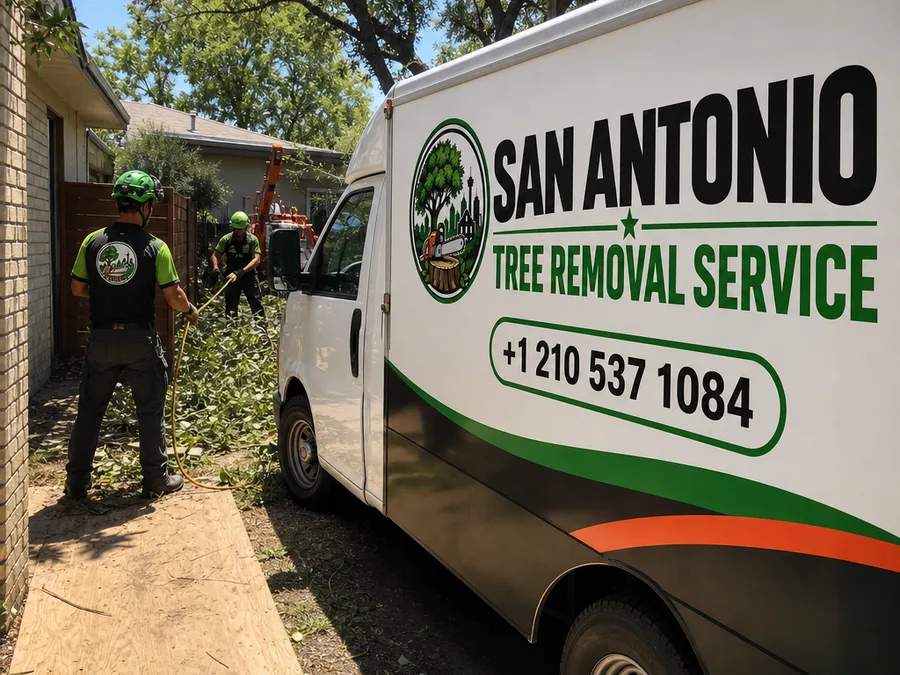
Helpful Answers
A certified arborist holds an ISA credential that can be verified by name or credential number through the International Society of Arboriculture. During scheduling or the visit, ask who will be performing the assessment and what credentials they carry, especially if you need written documentation tied to a specific inspector.
Yes, an on-site inspection can identify immediate hazards like hanging limbs, fresh cracks at unions, split leaders, and uprooting or soil heaving at the base. In San Antonio, wind events can leave damage that is not obvious from the street, so we focus on defects that signal near-term failure and prioritize what should be addressed first.
Yes, written recommendations are available when you need a clear scope, documentation for decision-making, or a record of the observed defects and proposed actions. Tell us upfront what the document needs to accomplish so the inspection can capture the right details.
Topping is generally not recommended because it creates large wounds, stimulates weak regrowth, and increases long-term failure risk. When height or clearance is a concern, we typically recommend structural pruning, reduction cuts, and targeted limb selection that keeps a stable framework.
Yes, we can assess risk and discuss options, but work near energized lines requires special planning and may require coordination with the utility for line clearance or temporary protection. The inspection helps define what is feasible and what steps must happen before any cutting near conductors.
Scheduling depends on season and storm activity, but we prioritize time-sensitive hazards like cracked trunks, leaning trees after rain, and large dead limbs over driveways or sidewalks. Share your timeline and what is at risk so we can recommend the right response.
Start With An On-Site Assessment
Tell us what you are seeing and where the tree sits on your property. We will schedule an on-site assessment, explain the safest options, and give you a clear scope you can act on.