A written scope before cutting starts
We walk the site, confirm what gets cut, where material will be lowered, and what gets hauled. You'll know what is included, not just a verbal estimate.
Serving San Antonio, Texas & surrounding areas
24/7 Emergency Response
Tree Cutting · San Antonio, Texas
Get a clear plan for safe cutting, controlled lowering, and complete cleanup, with straightforward pricing and scheduling that fits your property.
✓Controlled lowering
✓Written work scope
✓Complete cleanup
Controlled Cutting
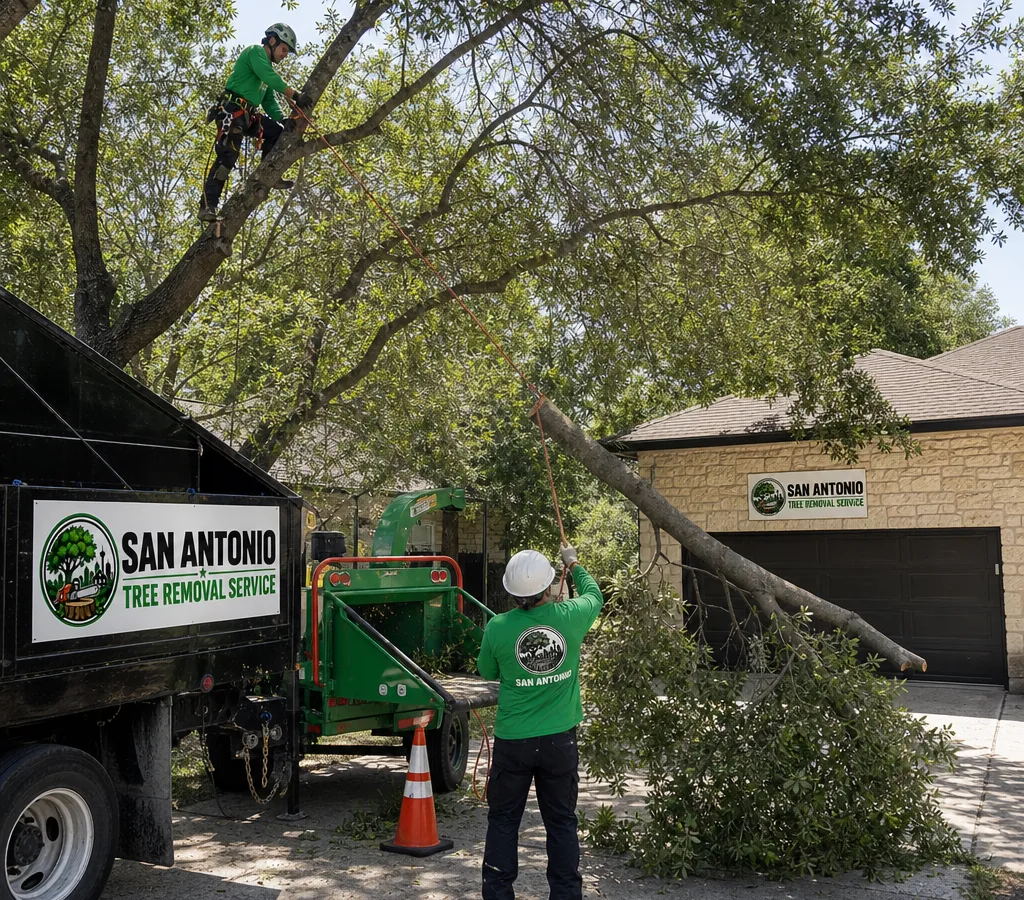
Tree cutting in San Antonio often isn't about dropping a tree in an open field. It's usually tight side yards, roofs and carports close by, overhead lines, and landscaping you want to keep. Our crew at San Antonio Tree Removal Service focuses on controlled cutting: sectional dismantling, rigging, and planned drop zones so limbs and wood land where they should.
We handle common situations like dead or storm-damaged limbs, trees growing too close to structures, and overgrown canopies that need careful reduction. If the right answer is selective cutting rather than taking the whole tree, we'll say so and scope it that way. If full removal is the safer option, we'll explain why and what changes in equipment, timing, and cleanup.
San Antonio's weather can change a job fast. After high winds or heavy storms, hangers—partially broken limbs caught in the canopy—and split unions become urgent hazards. We plan cuts around tension and compression wood, set exclusion zones, and work with ropes and friction devices to keep material under control.
If you want a broader look at our company and service area, you can view Tree Removal Service San Antonio for background and the full range of help we provide.
Clear Scope, Careful Work
We walk the site, confirm what gets cut, where material will be lowered, and what gets hauled. You'll know what is included, not just a verbal estimate.
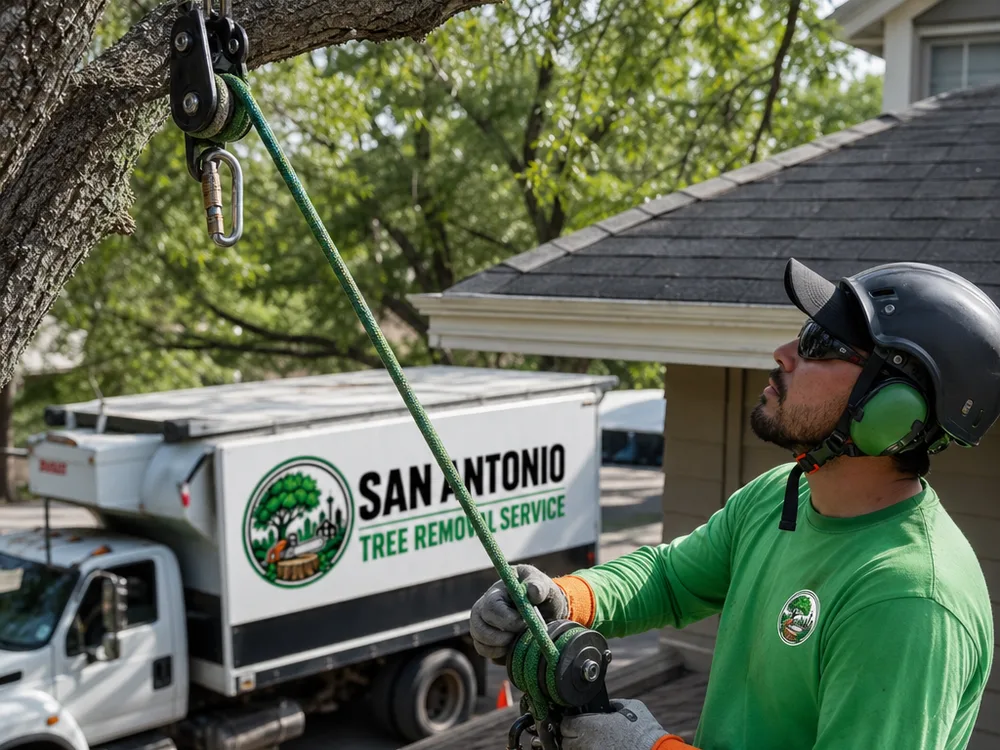
When space is tight, we cut in pieces and lower them with ropes and rigging points to avoid impact damage to roofs, fencing, AC units, and hardscapes.
We chip brush, stack wood as requested, and leave the area raked and blown out so you aren't left with a yard full of twigs and sawdust.
Pricing is based on size, access, hazards, and disposal. We explain what is raising or lowering the cost so you can make a clean decision.
If a limb is hanging or a tree is actively failing, we prioritize a fast site visit and a safe plan to reduce the risk on your property.
Planned Around The Property
A professional tree cutting service in San Antonio should look methodical on site. Before the first cut, we identify targets—roof edges, vehicles, fences, and patios—set a drop zone, and choose the safest direction for each piece to travel.
For tighter properties, we typically use:
If branches are near overhead utilities, the safe next step depends on clearance and what the line is. We will not cut within unsafe distance of energized lines. In many cases, the utility provider must handle line clearance work first, and then we complete the tree cutting once the site is safe.
We also pay close attention to access in San Antonio neighborhoods where driveways are narrow, gates are tight, or trees sit behind the home. Limited access can change the equipment plan and the way material is moved out, and we'll talk through that up front.
Inspection To Cleanup
We look at tree condition, lean, deadwood, hangers, access points, and nearby targets like roofs, fences, vehicles, and overhead lines.
We confirm exactly what is being cut, what stays, where pieces will be lowered, and what cleanup and hauling are included.
We mark drop zones, stage equipment, and set a safe perimeter. If rigging is needed, we install it before heavy cutting begins.
We remove material in a sequence that keeps weight balanced and predictable. Limbs are lowered or directed into the drop zone in manageable pieces.
We chip brush, load debris, and leave the area tidy. Before we go, we confirm the cut list is complete and the property looks the way you expect.
On-Site Pricing
Tree cutting in San Antonio typically ranges from about $250 to $1,500+ depending on whether you need a few limbs removed or a complex sectional cut near structures. Small trimming and limb removal is often in the $250 to $600 range, while large limbs, hazardous cuts, or hard-to-access trees commonly run $700 to $1,500+.
Final pricing depends on tree size and species, how close it is to roofs or lines, access for crews and equipment, how much rigging is required, and whether hauling and chipping are included. The exact cost is confirmed after an on-site inspection and a written scope.
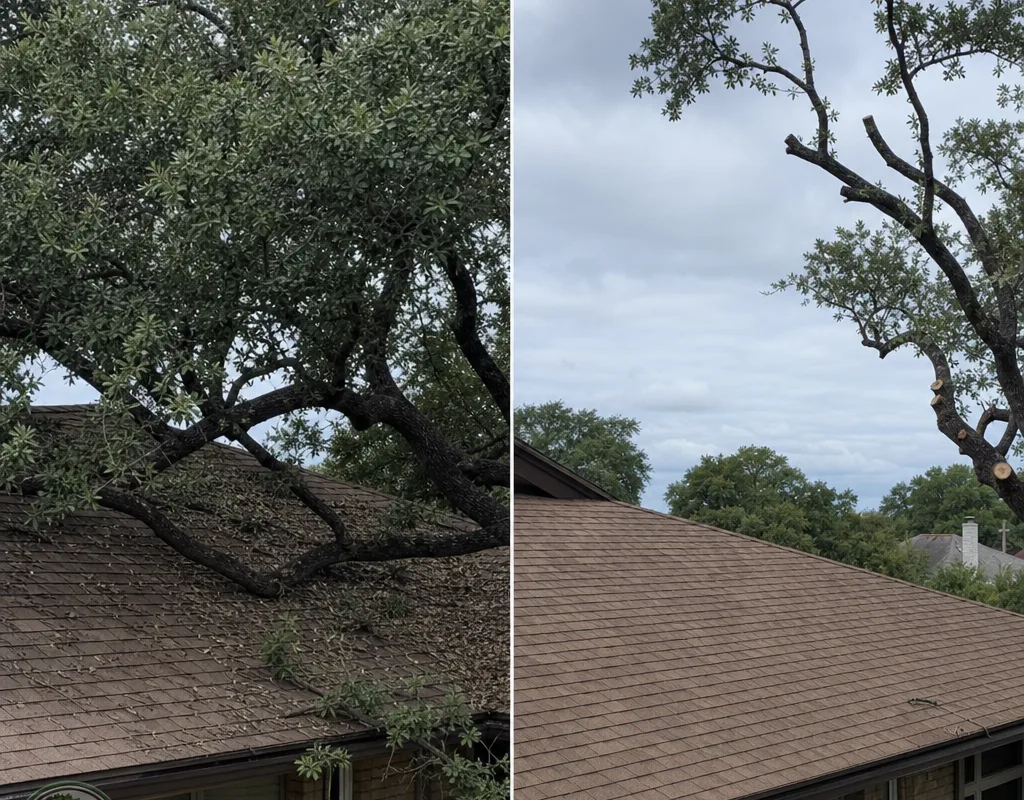
Field Examples
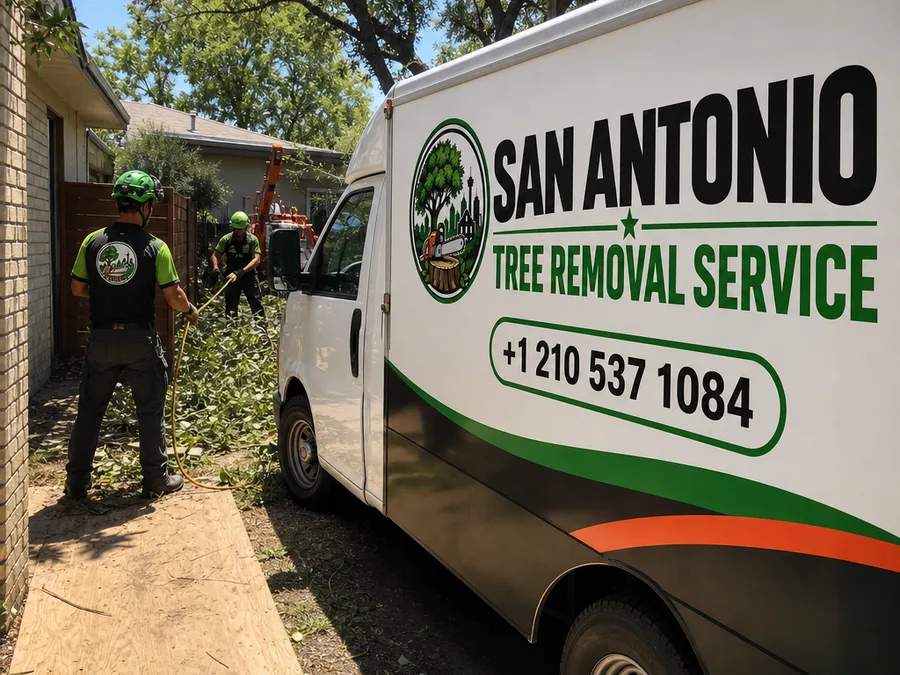
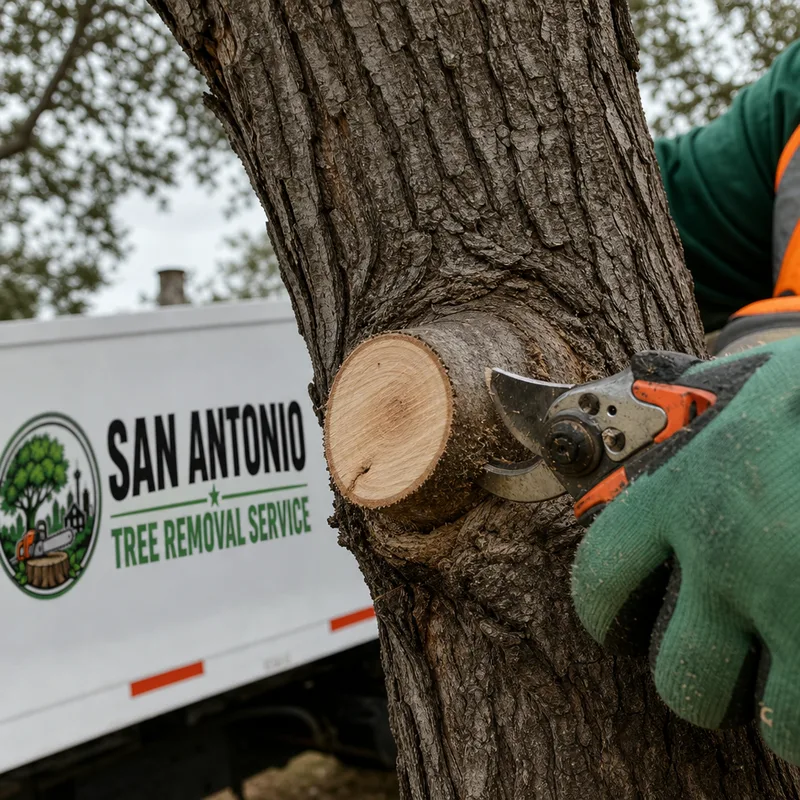
Start With A Site Visit
If you're dealing with a risky limb, a tree that's too close to your home, or storm damage, get a site visit so you have a safe cutting plan and a clear, written scope before any saw work begins.
Book Your Free InspectionHelpful Answers
Yes, in many cases a leaning tree can be cut safely by dismantling it in sections and lowering pieces with rigging instead of trying to fell it in one direction. The right approach depends on the lean, trunk condition, and available drop zone, which we confirm during an on-site inspection.
Cleanup typically includes chipping and hauling brush, removing cut limbs and debris, and raking or blowing the work area so you are not left with piles of small material. If you want wood rounds stacked for firewood or a specific area kept clear for access, we can include that in the scope.
We can cut near lines only when it can be done safely and within proper clearance. If limbs are too close to energized conductors, the utility provider may need to handle the line-clearance portion first; once the site is safe, we complete the remaining cutting based on the agreed scope.
Storm damage jobs are prioritized based on immediate hazards like hanging limbs, split trunks, or trees blocking access. Availability changes with demand after severe weather, but we aim to schedule a prompt site visit and then complete the work as soon as conditions allow.
It shouldn't when the work is planned correctly. We use controlled lowering, set drop zones, and stage equipment to limit impact on turf and hard surfaces; if access is tight and heavy material must be moved across a driveway or lawn, we'll discuss the safest route and expectations before work starts.
No. Tree cutting can mean selective limb removal or sectional cutting to reduce risk, while full removal means taking down the entire tree to the stump height agreed in the scope. If your situation points to full removal as the safer option, we'll explain the difference in time, equipment, and disposal.
Start With An On-Site Assessment
Tell us what you're seeing on site and what you want protected. We'll schedule a visit, lay out the safest approach, and provide a clear, written estimate for the cutting and cleanup.