Structural pruning, not guessing
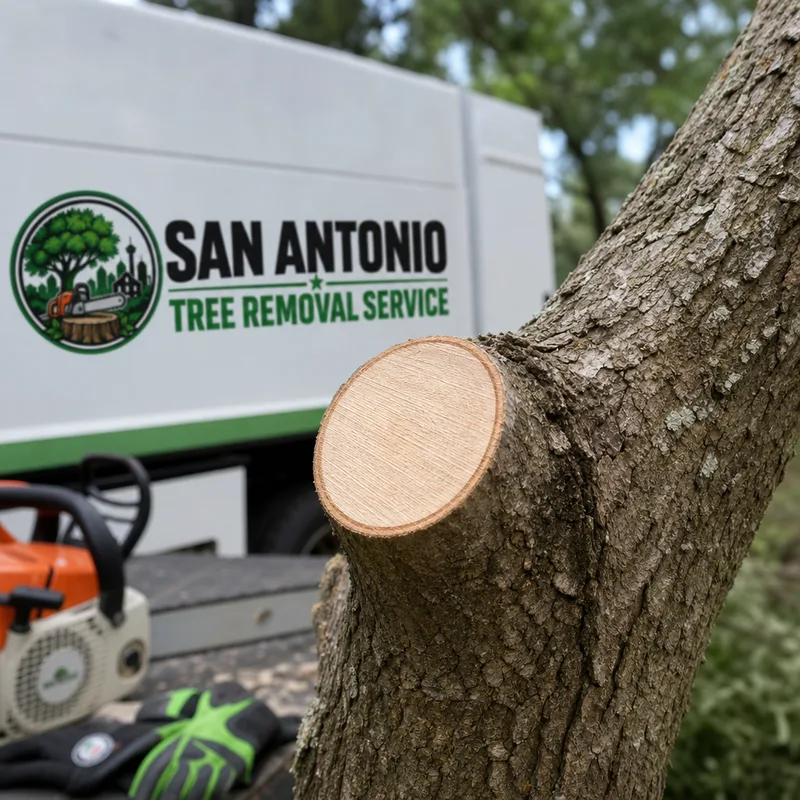
We focus on branch unions, weight reduction, and a balanced canopy. Cuts are made to appropriate laterals and branch collars to support proper closure and reduce decay risk.
Serving San Antonio, Texas & surrounding areas
24/7 Emergency Response
Tree Trimming · San Antonio, Texas
Get cleaner canopies, safer clearance over roofs and driveways, and pruning that respects the tree's structure. Our crews schedule quickly, protect your property, and leave the site tidy.
✓Structural pruning
✓Property protection
✓Careful cleanup
Purposeful Pruning
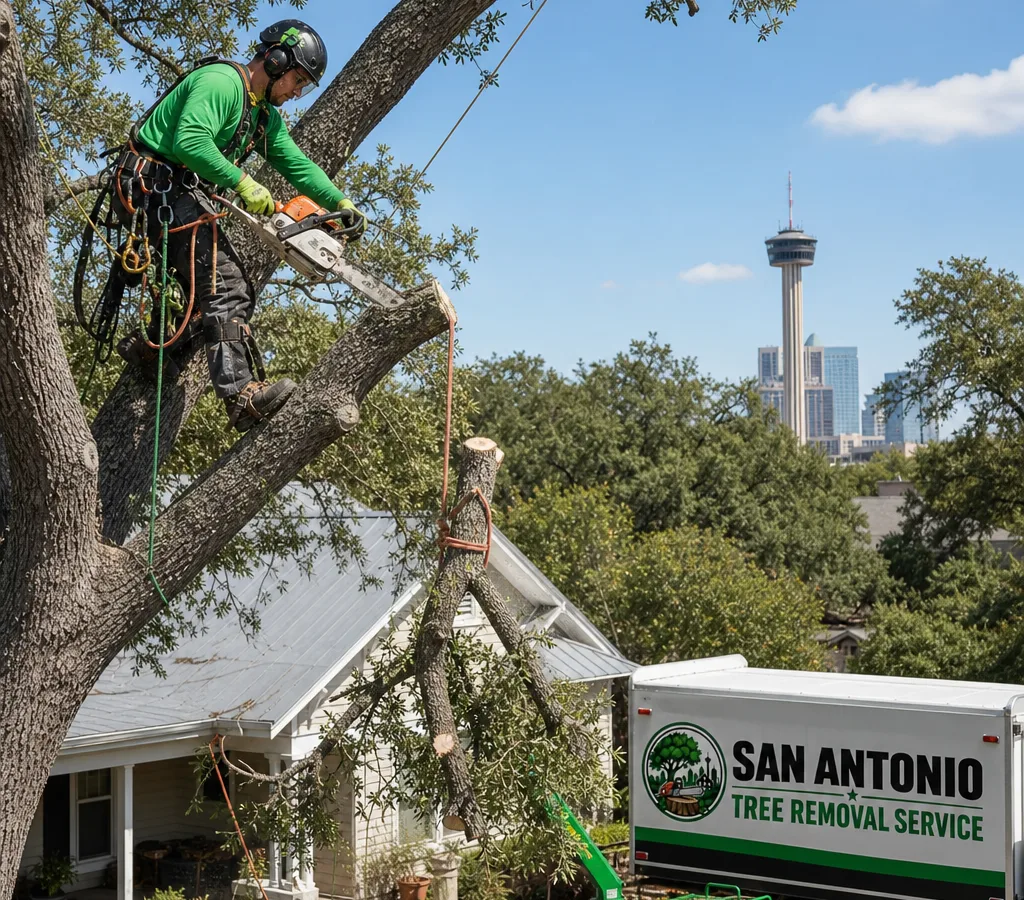
If you are searching for tree trimming san antonio tx, you likely want two things at the same time: better safety and a better-looking tree. Proper pruning is both. Done right, it reduces limb failures, improves clearance over structures and walkways, and keeps the canopy balanced so the tree can handle wind and storms.
San Antonio has plenty of large, mature trees—especially oaks—that grow over roofs, fences, and service drops. That makes pruning a technical job, not a weekend chore. Our approach is straightforward: we trim to reduce risk and weight, keep strong branch structure, and avoid the kind of topping and over-thinning that can stress a tree.
San Antonio Tree Removal Service provides tree trimming in San Antonio for homeowners and property managers who want a clear scope, careful work around structures, and cleanup that actually looks like cleanup.
Complete Canopy Care
We focus on branch unions, weight reduction, and a balanced canopy. Cuts are made to appropriate laterals and branch collars to support proper closure and reduce decay risk.
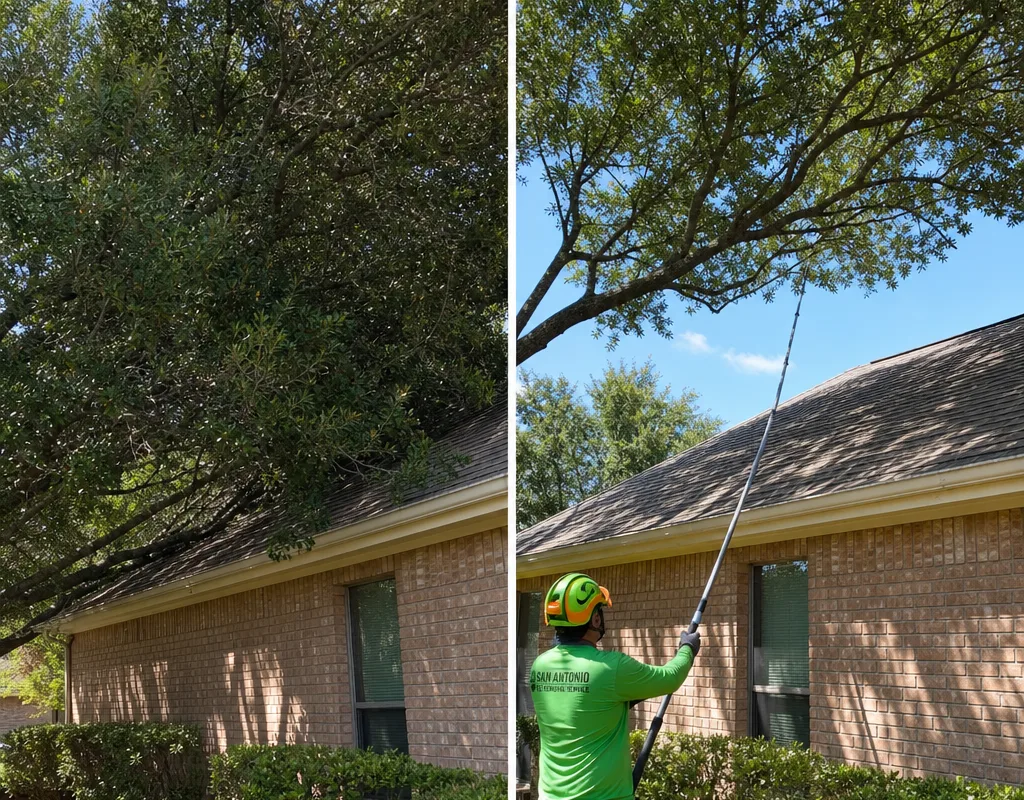
We raise and reduce canopies over roofs, driveways, sidewalks, and parking areas so branches are less likely to scrape, drop debris, or create access problems.
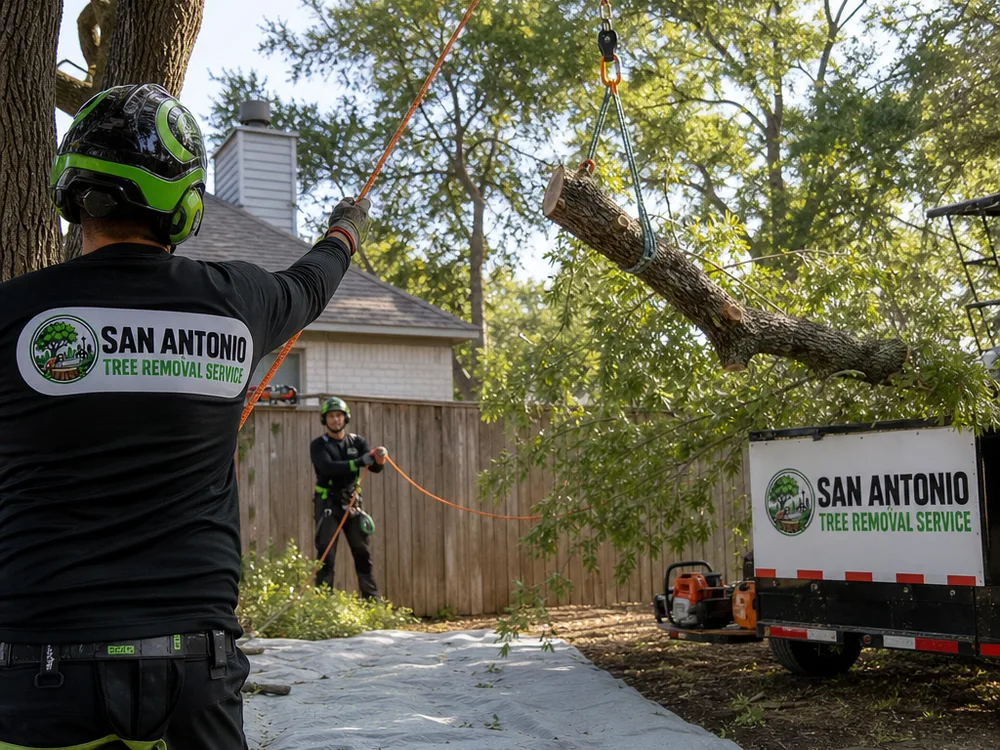
When limbs need to come down over shingles, HVAC units, patios, or fences, we use controlled lowering with ropes and rigging hardware instead of letting sections free-fall.
Before severe weather, we look for deadwood, cracked limbs, and overextended lateral branches. Targeted reduction can lower wind load without stripping the tree.
Brush is chipped and the work area is raked and blown. If you want to keep chips for mulch, we can typically leave them neatly on-site.
If a branch is better left alone, you will hear it. Over-pruning can create sunscald and weak regrowth, especially on trees that have been stressed before.
Correct Cuts Matter
Good trimming has a purpose. In practice, most tree trimming san antonio jobs fall into a few categories:
We also watch for common problems that lead to callbacks: flush cuts, stub cuts, stripping interior growth, and topping—cutting major leaders back to arbitrary points. Topping can trigger weak, fast regrowth and leave larger wounds that do not compartmentalize well.
San Antonio's heat adds another practical consideration: heavy pruning can expose bark and interior limbs to direct sun. When a tree needs significant risk reduction, we plan cuts to keep shade on key stems instead of opening the canopy too aggressively.
If you are also comparing companies for other tree work, our team details related services on the San Antonio tree service overview, but this service is focused on pruning and trimming.
Inspection To Cleanup
We look at the whole tree: canopy balance, deadwood, clearance conflicts, and any prior topping or storm damage. You get a clear plan for what gets cut and why.
We stage equipment for safe work zones and protect what matters: driveways, lawns, beds, fences, and rooflines. Tight access is planned before the first cut.
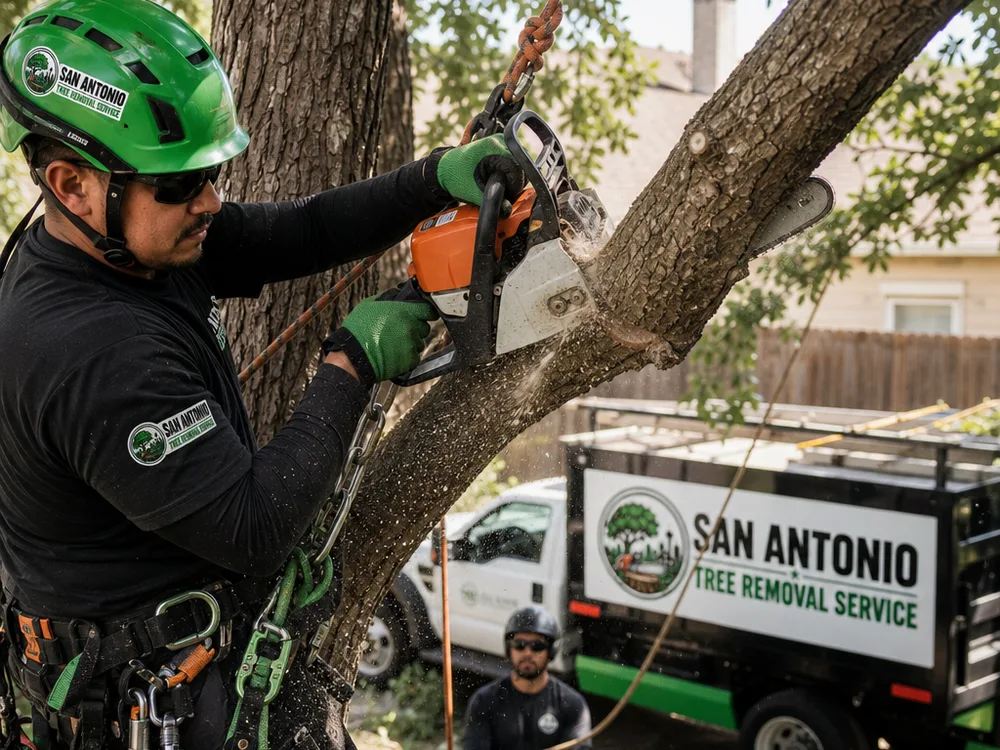
Depending on the tree and target area, we climb or use appropriate access equipment. Limbs over structures are lowered in controlled pieces to prevent damage.
After the primary cuts, we fine-tune for clearance and balance so the canopy looks natural, not “lion-tailed” or stripped.
Brush is chipped, larger wood is stacked or hauled as agreed, and we finish with a rake and blower cleanup so your yard is usable right away.
On-Site Pricing
Tree trimming in San Antonio typically ranges from about $200 to $900 for a single tree, with larger or high-risk trees running $900 to $2,500+ when rigging, heavy deadwood, or roofline work is involved. Small ornamental pruning is usually at the low end, while mature oaks with multiple leads and tight access trend higher.
Price depends on tree size and species, how much needs to be removed, access for crews and equipment, proximity to roofs or service drops, and whether debris is hauled off. The exact cost is confirmed after an on-site assessment of the tree and the work area.
Field Examples
Homeowner Experiences
“They trimmed two big oaks that were over my roof and driveway. The crew explained what they were cutting and why, and the trees still look natural. Cleanup was better than I expected.”
“We had dead limbs hanging after a windy week. They scheduled quickly, lowered everything safely, and didn't damage the fence line. The yard was spotless when they left.”
Helpful Answers
Most established shade trees do best with periodic pruning every few years, but the right interval depends on species, growth rate, and risk factors like limbs over roofs or driveways. Fast regrowth after previous topping or heavy cuts may require more frequent follow-ups, while a well-structured tree with good clearance can often go longer between trims. We can recommend a realistic cycle after we see the canopy and any clearance conflicts.
Routine pruning is commonly scheduled outside of peak heat and drought stress, but safety issues like dead, broken, or cracked limbs should be addressed as soon as they are found. For many properties, the “best time” is when you can get the work done before storm season and before limbs start interfering with the roofline, vehicles, or walkways. If timing matters for a specific tree, we will explain why during the assessment.
Yes, when the crew uses controlled rigging and lowering instead of dropping limbs. For branches over structures, we typically cut in smaller sections and lower them by rope so the load is managed and the landing zone stays clear. The method is chosen based on limb weight, angle, and the target area beneath it.
Topping cuts major leaders back to random points, leaving large wounds and encouraging weak, fast regrowth. Proper crown reduction shortens selected limbs back to suitable laterals so the tree keeps a natural structure and the cuts are placed where the tree can respond better. If height or spread needs to come down, reduction cuts are the standard approach.
You do not always need to be home, but it helps to walk the scope together first so clearance goals are clear and any must-protect items—gates, AC units, or fragile landscaping—are identified. If you cannot be there, we can usually confirm the plan ahead of time and proceed as long as access and approvals are in place.
Yes, cleanup is part of the job plan, and haul-off can be included when requested. Brush is typically chipped, and we finish with a rake and blower cleanup so you are not left with scattered twigs and sawdust. If you want chips left for mulch, that can often be arranged during scheduling.
Start With An On-Site Assessment
Tell us what trees you are concerned about and what they are growing over. We will assess the canopy, recommend the right type of pruning for your goals, and provide a written scope and schedule that fits your property.